

Originally Published September 1, 2015
By Karna Gowda, Alicia Foxx, and Kevin Song, Organizers of ComSciCon-Chicago
During the ComSciCon 2014 national workshop, organizers and attendees discussed the idea of ComSciCon workshops back to our home institutions. Nearly forty Chicago-area students had applied for the Cambridge workshop that year, but only a few could attend. To address this substantial interest, Northwestern University students Brian Aguado and Karna Gowda resolved to organize a ComSciCon workshop for the Chicago area.
ComSciCon-Chicago 2015 was born out of the hard work of dedicated graduate student organizers from Northwestern University and the University of Chicago. We began organizing the workshop over a year ago, deciding early on to incorporate panel discussions, a writing tutorial, and many opportunities for networking among attendees and invited experts. We announced ComSciCon-Chicago in April, and by May, we had received almost two hundred applications. By June, we admitted fifty students, who came primarily from the Chicago area, though several students were admitted from farther away (from the University of Illinois at Urbana-Champaign, Notre Dame University, and the University of Wisconsin-Madison).
This was the third regional “ComSciCon-local” workshop held in 2015, following events in the North Carolina Research Triangle (ComSciCon-Triangle) and Cornell and the upstate New York region (ComSciCon-Cornell).
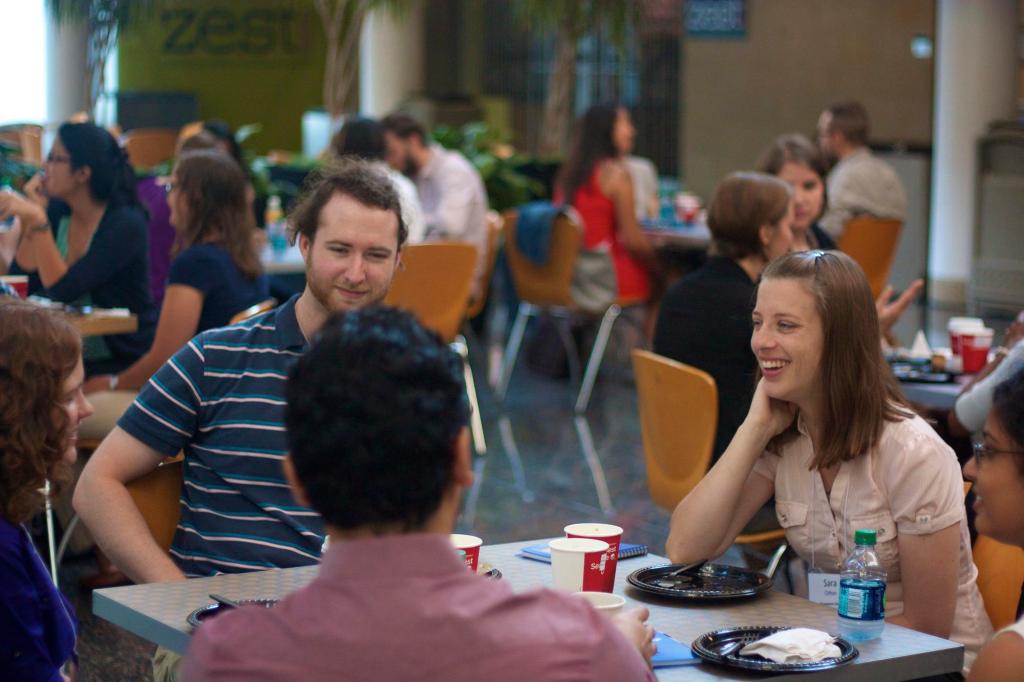
The first-ever ComSciCon-Chicago workshop was held Aug 15-16, 2015. The workshop featured four major components: panel discussions, a writing session, and a public keynote address, and break-out sessions. Our panel discussions focused on communicating with non-scientists, communication in politics and policy, communicating with multimedia, and outreach/education. The communicating with non-scientist audiences panel elaborated on the experiences of the panelists as they worked with the public to increase understanding of scientific concepts. The politics and policy panel examined the challenges faced when conveying research to policy makers and how we might bridge the divide. The panel on communicating with multimedia reviewed effective ways to use audio and visual media to reach broad audiences. The outreach and education panel focused on the panelists’ paths to outreach careers at universities and museums.
Our writing tutorial session was inspired by the ComSciCon “Write-a-thon”. A week before ComSciCon-Chicago 2015 began, participants had submitted original works of writing, which were distributed to pre-assigned peer review groups for feedback. The participants brought the feedback to their small groups, each headed by a writing expert, to discuss the works in-person. We are currently working with several attendees to find publication outlets for the writing they created for our workshop.
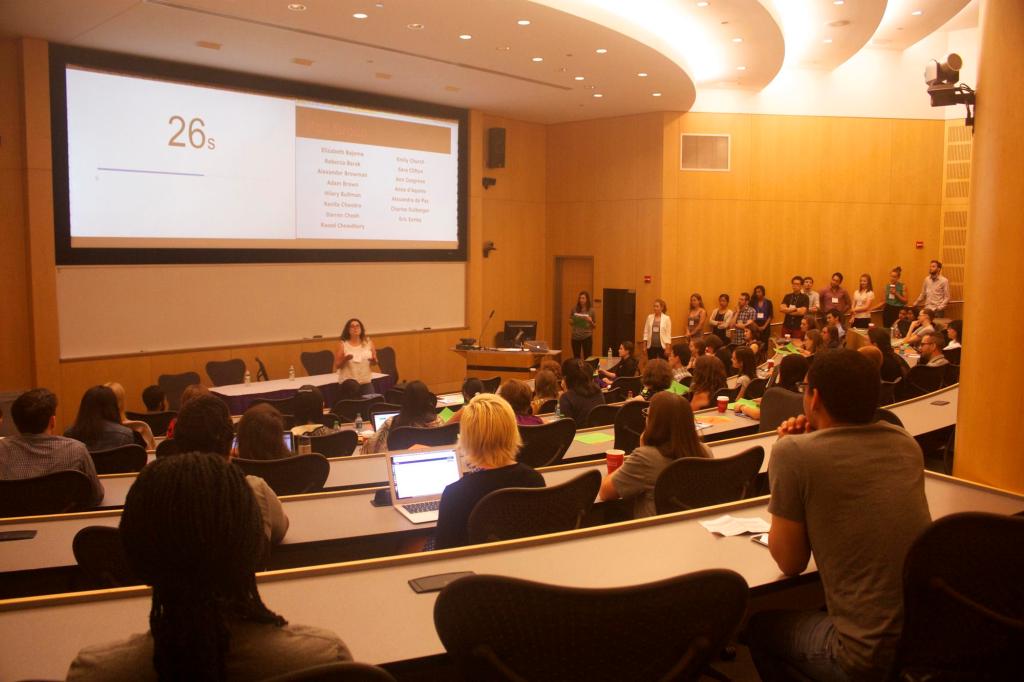
Our public keynote lecture was delivered by Dan Kahan, the Elizabeth K. Dollard Professor of law at Yale Law School. His recent studies showed that there are no significant differences in scientific literacy between the right and the left, yet the different ideologies differ widely in what they believe is the correct political decision. Kahan contended that several scientific topics, including global warming, the theory of evolution, and vaccinations have been polluted by party affiliations, and that the current political culture promotes a discussion of these topics that is dominated by party ideologies rather than by scientific knowledge.
To give our attendees an additional opportunity to build skills, we held one-hour tutorial sessions which were lead by outside experts. Attendees were given the choice to attend one of three sessions. One session focused on the basics of delivering a TED-style talk, with tips on how to see the story in one’s research. Another focused on starting an effective outreach program, finding resources for support, and evaluating progress along the way. The third session demonstrated how to bring research into K-12 classrooms through creative activities and experiments.
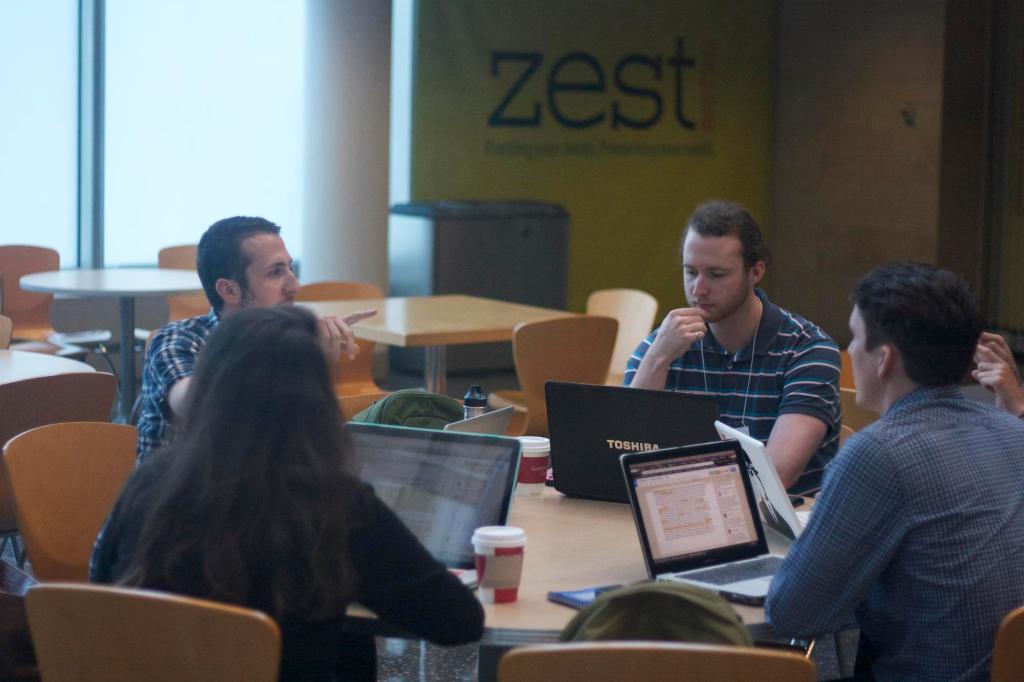
One of our goals in this workshop was to inspire the participants to become active in the ComSciCon community. Many attendees have expressed their interest in organizing ComSciCon-Chicago 2016, and the organizing effort is already underway!
ComSciCon-Chicago 2015 would not have been possible without the help of many organizations including Northwestern University’s Graduate School, Materials Science Umbrella Society, McCormick School of Engineering, Interdepartmental Biological Sciences, Ready-Set-Go Collaboration, and the Department of Plant Biology and Conservation, as well as University of Chicago’s Graduate Council and the Biological Sciences Division Dean’s Council.

 ComSciCon