Originally Published October 1, 2020
By Stephanie (Hamilton) Deppe
We are thrilled to announce that ComSciCon partnered with Natural History magazine to create a special print edition of the September 2020 magazine especially to feature voices from ComSciCon-affiliates!
The magazine features articles written by six ComSciCon participants (including four from the recent 2020 Flagship). The articles span a variety of topics — from food science to data visualization, plant science to space probes — making this special issue a great showcase of ComSciCon participants and their interests!
Here we provide brief snapshots of each article. You can access the full issue from the link at the bottom of this page (thanks to our friends at Natural History!).

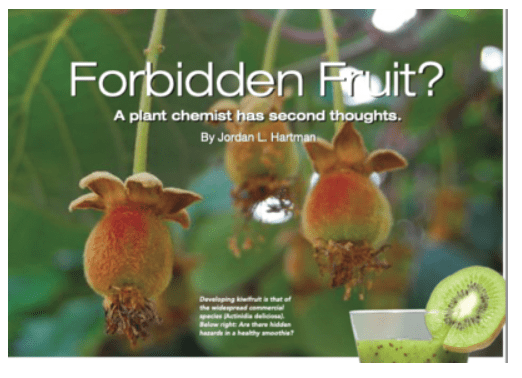
Forbidden Fruit? — by Jordan L. Hartman
ComSciCon-Michigan 2019
Have you ever noticed that tingling sensation you feel on your tongue when you eat certain citrus fruits, like kiwis? Jordan Hartman walks us through his experience — from assuming an allergic reaction, to testing different food combinations via the scientific method, to a comforting conclusion. Pair that with a humorous writing voice, and this article will draw you right in.
Going to Bat for Bats — by Alyson F. Brokaw
ComSciCon-Flagship 2020
Ah bats….those creatures that roost in your attic or feed on mosquitoes in the night. We tend to think of them as a singular species (just, “bats”), but in actuality there are well over 1,000 different species of bats around the world. Many of these species are threatened by human-caused factors, but conservation efforts must account for the needs of the specific species under consideration. In this article, Alyson Brokaw notes that generalizations can lead to fear and disgust, while digging into the details can lessen those sentiments. And you might just grow to love bats along the way.

Cattail Tale — by Verena Sesin
ComSciCon-Flagship 2020
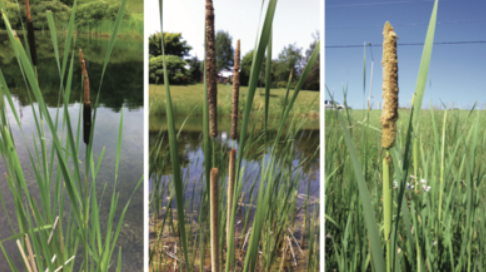
If you have any experience with wetlands, chances are you’ve seen the plant known as a cattail before — tall, thin stalks with corn-dog-like structures at the end. But in the Midwestern US, 1950s scientists noticed that some cattails began to aggressively outcompete other plants. The culprit turned out to be a hybrid species of cattail, but for a long time scientists didn’t know why some hybrids were so successful in certain areas but not found at all in others. Answering that question is crucial to understanding these cattails’ invasive behavior and preserving biodiversity.
A Vital Balance — by Anya M. Nikolai-Yogerst
ComSciCon-Flagship 2020
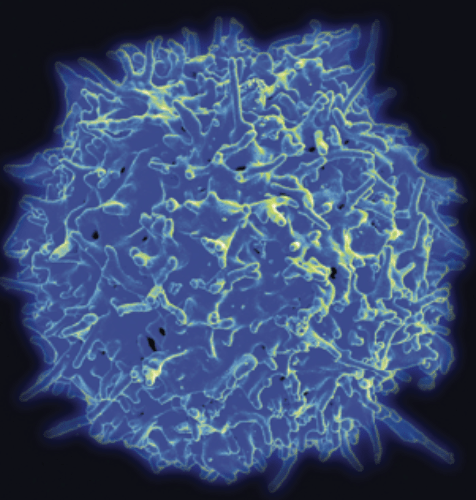
Vitamin D is often touted as an effective and important vitamin for boosting your immune system and combating illness. While the nutrient won’t necessarily protect against infection, some studies have suggested that it can reduce the severity of symptoms — but only in balanced doses (yes, Vitamin D can be toxic if you take too much!). But for cancer, study results are mixed on whether Vitamin D supplements help, with some suggesting that supplements can actually be harmful. The interplay between diet, nutrients, and our immune systems remains less understood than we might otherwise hope for.
Visualizing Uncertainty — by Derya Akbaba
ComSciCon-Flagship 2020
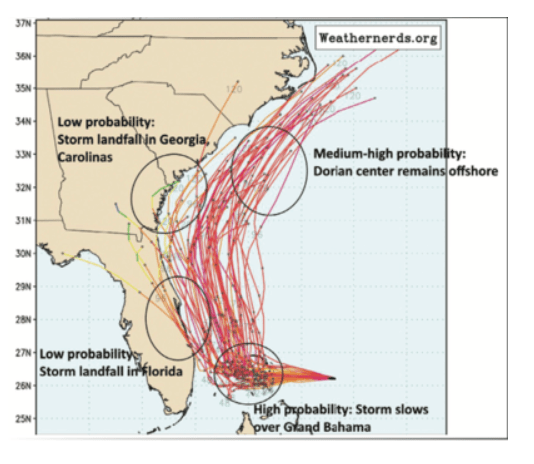
Most of the time, raw numbers are only part of the story. Just as important (if not more so) is the uncertainty in those raw numbers. These uncertainties are key in statistical modeling, like forecasting hurricane paths or predicting case or death counts of COVID-19. In this article, Derya Akbaba makes a case for the importance of communicating uncertainties and staying skeptical when they’re not presented. You’ll certainly become more certain about uncertainty after reading!
When Outreach Becomes a Priority — by Stephanie Hamilton
ComSciCon-Flagship 2018
What if we had spent billions of dollars to go all the way to Jupiter….without a camera? That’s almost what happened with the Juno spacecraft currently in orbit around the Solar System’s largest planet. Optical imagery was not necessary for the spacecraft’s scientific goals, but a small camera was finally included to further the mission’s education and outreach goals. And good thing — we are now treated almost daily to new, gorgeous images of Jupiter thanks to the efforts of a small team of scientists who were passionate about public outreach.

Congratulations to all of these authors!
 ComSciCon