

After four years of involvement with ComSciCon, Emily Costa thought her work with the organization was over after she transitioned out of the role of being the chapter lead in 2024.
“I was like, ‘Well, I had fun with ComSciCon. I’m sure I’ll still see them around.’”
But then, Harshil Kamdar, Co-Chair of the ComSciCon Leadership Team, sent Costa a request for grant proposals from the Kavli Foundation to fund science projects that incorporated public or ethical engagement.
“It was like that meme of the guy looking back at another girl. I was like: ‘What is this?’”
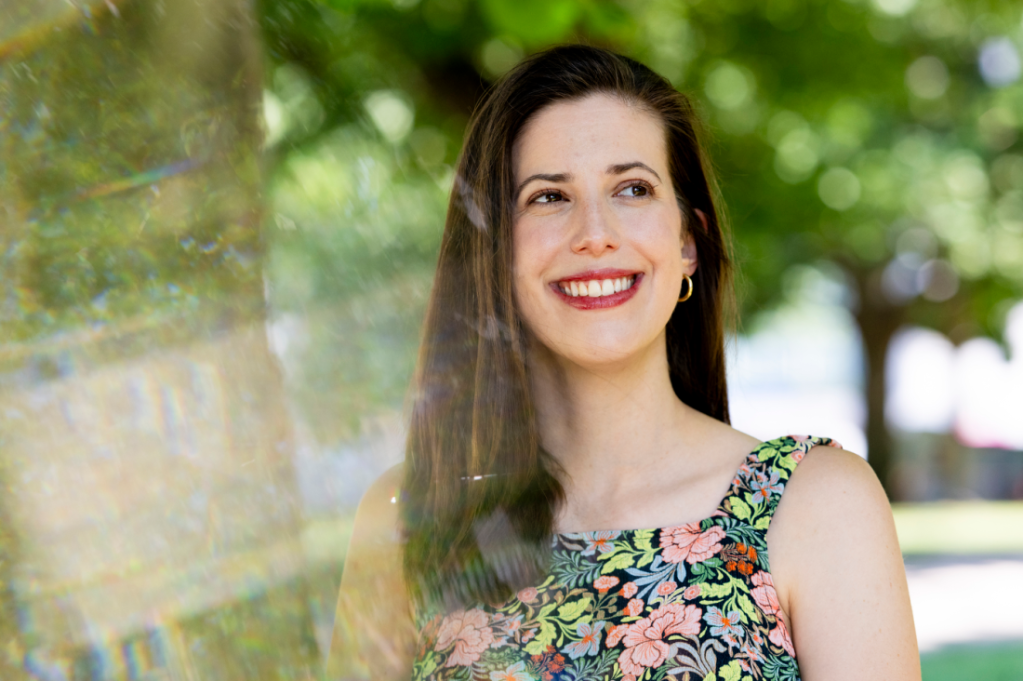
Costa and Kamdar sent the opportunity along to other ComSciCon organizers, recognizing that it was “a perfect match” with ComSciCon’s mission: “Our whole thing is working with early career researchers who are enthusiastic about science communication.”
Two more ComSciCon organizers––Meredith Schmehl and ComSciCon Co-Chair Nathan Sanders––joined in to write a grant proposal that would ultimately become SEEDS: Stories of Ethics, Engagement, and Dialogue in Science. Once the project got started, the team also received additional funding from the Rita Allen Foundation to make the project a reality.
SEEDS pairs early career writers with basic scientists out in the world who are working to engage with the social and ethical aspects of their research. ComSciCon writers will each interview and write about their subjects, contributing to a publication full of stories and advice for other researchers who want to do more publicly engaged work themselves.
Costa spent her PhD doing cancer biology research and practicing various forms of science communication. Her work doing the latter led her to her current position working as a Civic Science Associate in the Rita Allen Foundation Civic Science Fellows program, which is based out of RockEDU Science Outreach at The Rockefeller University. Looking back at her academic training, she recognizes how difficult it is for researchers to engage with the public beyond the ivory tower.
“Within academic science, you are trained to be a researcher, but the paths to interface with these other societal dimensions of your research aren’t very clear,” she reflects.
Schmehl similarly works in the civic science space, having pursued a PhD doing neuroscience research while forging an additional path in nonprofit communications, and now works as an open science program coordinator for the Howard Hughes Medical Institute.
“I don’t do research anymore, but I work in open science where we think about ways to make science more accessible and to make sure scientists have the tools and resources to do that effectively.”
“I see a big connection between that work and SEEDS,” Schmehl shares, “because there’s really a need to help scientists think about how their work connects to the public to make sure science is a force for good in the world.”
Schmehl also sees SEEDS as an exciting opportunity for ComSciCon as an organization: “This is an opportunity to engage a larger group of people and bring people in more from the perspective of ethics and how we communicate about it, rather than just basic science itself, which I think is really exciting.”
Starting in January, the SEEDS project will host a series of webinars so the public can hear from scientists who are doing publicly engaged work. The project will culminate in a publication full of the stories of scientists who engage with ethics and their advice to help others do the same.
To learn more about SEEDS, visit the program webpage: https://comscicon.org/seeds-stories-of-ethics-engagement-and-dialogue-in-science/
 ComSciCon
Leave a comment