
Welcome

Follow us on Twitter: @ComSciConMI
Application

Organizing Committee
Mylena Ortiz (she/her)
Chair
Mylena is a 4th year Ph.D candidate in the Genetics and Genomics Sciences program at Michigan State University, born and raised in Brazil. She is a molecular biologist passionate about the genetics of cancer and precision medicine. Currently, she is in the lab of Dr. Eran Andrecheck researching cell signaling regulation by tyrosine phosphatases in lung cancer and mechanisms of metastasis driven by the tumor microenvironment in breast cancer. Mylena attended ComSciCon -MI in 2023 and, because she believes that scientists must be trained to spread the word from inside the academic world to non-scientific communities, she promptly volunteered to be the chair of ComSciCon-MI 2024 to achieve this purpose. Mylena loves being involved in event organization and project management. Aside from her work, she enjoys traveling, a good outdoor adventure, crafts, exploring new places, and finding new restaurants! LinkedIn: https://www.linkedin.com/in/mylena-ortiz-a12295161/
Charukesi Sivakumar (she/her)
Co-chair
Charu is a PhD candidate in Molecular and Cellular Pathology at the University of Michigan. She is in Dr. Rajesh Rao’s lab, studying the role of epigenetics during retinal development and disease. Before coming to Michigan, Charu completed her B.S. in Biochemistry at the University of Texas at Dallas, where she studied fruit fly genetics, trying to understand the mechanisms of “selfish” genes. Charu attended ComSciCon-MI in 2023, where she was first introduced to what SciComm could entail. She is serving as the Co-Chair for ComSciCon-MI 2024, and is eager to meet and connect with fellow scicommers! When she’s not in the lab, you can find her playing the violin with the U of M Life Sciences Orchestra, reading, playing disc golf, doing art, or spending time outdoors. Connect with her on Twitter and/or LinkedIn.
Courtney Myers (she/her)
Write-a-thon Leader
Courtney is a PhD student in the Neuroscience Graduate Program at the University of Michigan. Her research focuses on cholinergic input to the inferior colliculus and how this innervation relates to sound integraiton and salience. Courtney is committed to advancing Diversity, Equity, and Inclusion (DEI) in STEM, and bridging the gap between academia and the broader community through clear and accessible explanations of scientific concepts and discoveries. Her hobbies include playing with her dog, tending to her plant collection, and spending time with friends & family. Connect with her on LinkedIn!
Katherine Furman
Write-a-thon Leader
Katherine (Katie) Furman is a 6th year PhD student in Neuroscience at the University of Michigan. Her dissertation is focused on the neural circuitry of the Melanin Concentrating Hormone (MCH) system as it relates to feeding/reward behaviors. Katie is passionate about science communication, and hopes to pursue a career in the field following her PhD thesis defense in 2025. She is eager to meet others with similar interests at ComSciCon MI 2024! Outside of work, Katie likes to read, go on long walks with her dog, and watch all the reality TV she possibly can.
Catherine (Cathy) Mercado
Co-Panel Leader
Cathy Mercado is a 3rd year PhD student in the Plant Biology Department and Molecular Plant Sciences Dual Degree Program at Michigan State University. She received her B.S. in Biochemistry from the University of Texas at Austin, where she became interested in the plant molecular biology. Her current work in Robert VanBuren’s lab has her investigating the physiology and molecular landscape of prolonged desiccation tolerance in resurrection plants. Besides her huge enthusiasm for research, she is a proponent of science communication practices. She participated in ComSciCon-MI ‘23, and used tips from the workshop to help give her MSU Ignite talk. You’ll often find her hanging out with her dog Ekko while trying to keep her house plants alive. LinkedIn
Aishwarya Bhurke (she/her)
Web Manager
Aishwarya Bhurke is a second-year PhD student in the Genetics and Genome Sciences Program at Michigan State University. She is originally from India and holds a bachelor’s degree in Biotechnology and master’s in Biomedical Genetics. Her academic journey is driven by a deep passion for research in reproductive biology, particularly focusing on uterine function and embryo implantation. Currently under the mentorship of Dr. Ripla Arora, her research centers on understanding the biomechanics of uterine gland structural changes during early pregnancy. Aishwarya firmly believes that embracing diverse backgrounds and perspectives is crucial for developing comprehensive solutions to future challenges, both locally and globally. Beyond her academic pursuits, she enjoys dancing, creating illustration art, and spending quality time with family and friends. Connect with her on LinkedIn!
Nicholas Heilman (he/him)
Accounting Liaison
Nic is a third-year Ph.D. candidate at Michigan State in the Department of Computational Mathematics, Science, and Engineering. His research focus is on computational biolocomotion and applications to high-performance computing. Prior to coming back to school, he worked as an engineer for a vegetable oil extraction/refining plant after earning a Bachelor’s degree in chemical engineering. Nic advocates for STEM literacy and believes that building strong science communicators is the key to helping the general population grow. He attended ComSciCon-MI in 2023 and is excited to help continue the event. Aside from research, Nic enjoys cycling, board games, and working on home improvements. Feel free to connect on LinkedIn!
Heather Murdoch
Catering
I am a fourth year Ph.D student in Microbiology, Genetics, and Immunology. My Ph.D focuses on Mycobacterium Tuberculosis, and I am studying how this pathogen is able genetically controls its growth during infection inside the macrophage based on carbon source availability. I also identify as an indigenous student from the Sault tribe in Sault.ste Marie, MI.
I plan to use my degree to improve the political climate and plan to use my platform in science communication to improve health policies and education in indigenous communities.
Harmant Grewal
Co-Panel Leader
Program

Pop Talk Instructions
There will be four rounds of Pop Talks, with each participant given a 1-minute time limit. The topics for each round are as follows:
Round 1: Break down your science to a Kindergartener
Round 2: How would you explain your job at a family gathering?
Round 3: Explain the impact your science will make to a government official
Round 4: Explain your research to a kid in high school who is interested in pursuing the same career as you
Venue
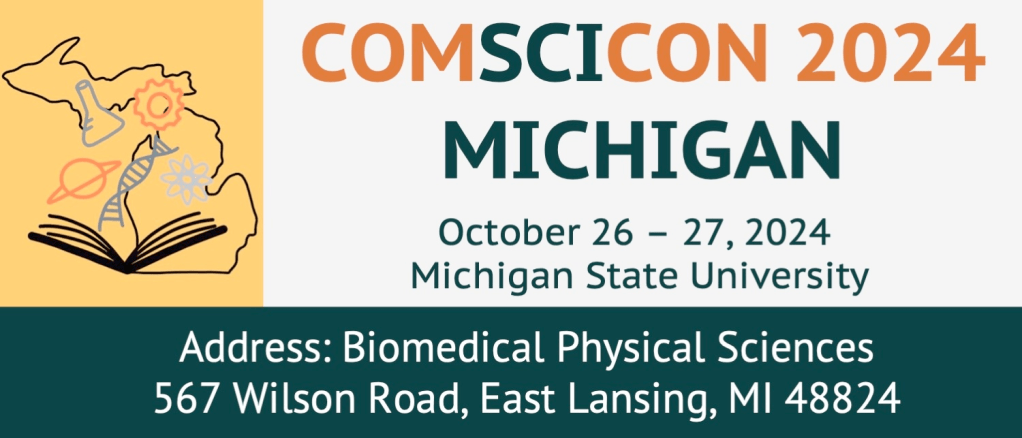
Map showing location of Biomedical and Physical Sciences (BPS) Building:

Invited Experts
Invited Experts
Keynote Speaker
Dr. Rishi Masalia
Program Director for the 39 North AgTech Innovation District in St. Louis, MO
Dr. Rishi Masalia is the Program Director for the 39 North AgTech Innovation District in St. Louis, MO. This non-profit organization represents the main agricultural and sustainability ecosystem for the St. Louis region and thus supports researchers and companies through infrastructure, professional development training, events, and content amplification through various physical and digital content channels. Through this role he operates as a translator between scientists and non-scientists across local, regional, national, and international government groups, finance groups, real estate developers, scientific companies, academics, etc. While not specifically outlined in the job description, science communication of various topics and effective communication of scientific values is a critical component of the position. Beyond his role at 39 North, Rishi founded Sage Advice Consulting, which specialises in the creation of and stand alone guides primarily focused on up-skilling knowledge around startups, science communication, and team management. He also serves on two venture capital science advisory boards communicating to financial groups what companies to invest in. Rishi was the former VP of Biotechnology for Running Tide, a global leader in ocean-based carbon removal, tasked with building up their research division and seaweed products. Prior to that, he helped co-launch LeafWorks Inc. a Cannabis service company providing high-quality genetic testing and consulting for farmers to improve supply chain validation. In graduate school he co-founded the Athens Science Café in 2013 and Athens Science Observer in 2015 both in Athens, GA. These two organizations teach faculty and students how to effectively communicate science to non-scientists, and have trained well over 250+ individuals across their tenure. He has also interviewed over 50 scientists on behalf of the American Society of Plant Biologists (ASPB) through a variety of podcasts and video series, as a way to better understand and relay career trajectories to students. Rishi has over a decade in the communication and marketing space, and has spent the last six years working for and with various seed and Series A startups. He has a PhD in plant biology from the University of Georgia (Go Dawgs!) and a BS in biology from the University of Arizona (Go Cats!).
Dr. John C. Besley
Ellis N. Brandt Professor of Public Relations at Michigan State University
Dr. Besley studies public opinion about science and scientists’ opinions about the public. His goal is to help science communicators be more effective by helping them consider evidence-based and strategic communication choices. He also does research aimed at understanding how peoples’ views about decision-makers and decision processes (i.e., trustworthiness and fairness beliefs) affect their overall perceptions of science and technology (S&T) with potential health or environmental impacts. His research has touched on public perceptions of agricultural biotechnology (i.e., genetic engineering), energy technologies (i.e., nuclear energy, hydrogen fuel cells), and nanotechnology. He has also conducted research into journalistic norms related to coverage of public engagement and research to better understand the impact of science communication training.
Dr. Besley earned his Ph.D. in Communication from Cornell University in 2006 and both master’s (Public Administration, 2000), and bachelor’s (Journalism, 1998) degrees from Carleton University in Ottawa, Canada. Prior to his Ph.D., Dr. Besley served as a policy analyst with Environment Canada’s Policy and Communication’s division working on international environmental issues.
Dr. Matt Davenport
Science Writer, Editor, Physicist
Matt is an award-winning writer helping cover stories about science and the environment for University of Michigan News. He graduated from the Science Communication Program at the University of California, Santa Cruz in 2014, after earning his doctorate in condensed matter physics. His work has appeared in Scientific American, Chemical & Engineering News and the YouTube series, SciShow. He’s worked in higher education since 2020, starting that chapter of his career with Michigan State University.
Panelists
Dr. Emily L. Eberhardt
Research Specialist at the University of Michigan
Emily L. Eberhardt, PhD is a research specialist at the University of Michigan. Her curiosity in science started early, with a project on the “five-second rule” that placed in the Louisiana State Science Fair. Emily started her B.S. in Microbiology at Mississippi State University before transferring to the University of Wisconsin at Madison, where she graduated in 2018. In 2023, Emily completed her PhD in Cellular and Molecular Biology at the University of Michigan, focusing on the structural and biochemical properties of the outer-mitochondrial membrane protein, Miro1. In 2024, she completed a Postdoctoral Fellowship in Otolaryngology. Beyond the bench, Emily is an avid science communicator and artist. She has been an editor for the University of Michigan’s Michigan Science Writers since 2022 and was promoted to senior editor in 2023. Additionally, Emily started “bioart by emily” in 2020, where she creates and sells original science-themed art. Recently, Emily was published in Science, where she shared her experiences with mental illness and burn-out in graduate school. In her free time, she enjoys watching reality T.V. and gathering good memes.
Emilie Lorditch
Science Public Relations Manager for Michigan State University’s University Communications
Emilie Lorditch is the Science Public Relations Manager for Michigan State University’s University Communications. For over 25 years, she has been a science writer and has written for video, print and online publications, covering everything from astronomy to zoology for audiences ranging from kids to their parents and grandparents. Emilie’s stories have appeared in NBC News, Scientific American and the San Francisco Chronicle.
Kara Gavin
Lead Public Relations Representative for Michigan Medicine, U-M’s academic medical center, Research & Policy Media Relations manager for the U-M Institute for Healthcare Policy and Innovation
Kara Gavin, M.S., specializes in writing engaging stories about discoveries and issues in science, medicine and health policy. For nearly 30 years, most of them at the University of Michigan, she has helped bring the work of researchers to broad public audiences and to the attention of reporters. She also works to help researchers and those in training develop their own skills for public communication. A science writing graduate of Lehigh University and the Columbia University Graduate School of Journalism, she serves a Lead Public Relations Representative for Michigan Medicine, U-M’s academic medical center, and as Research & Policy Media Relations manager for the U-M Institute for Healthcare Policy and Innovation. She was elected a Fellow of the American Association for the Advancement of Science in 2022. She helped found the U-M Life Sciences Orchestra in 2000 and has served on its executive committee ever since.
Bruno Takahashi
Brandt Professor of Environmental Communication, Michigan State University
Bruno Takahashi is the Brandt Professor of Environmental Communication at Michigan State University with a joint appointment in the School of Journalism and AgBioResearch. Dr. Takahashi is also the research director of the Knight Center for Environmental Journalism. His research examines media representations of environmental and science issues, environmental journalism practices, and science communication. He has a particular interest in the communication of environmental issues in Latin American media and US Latino media, and how this relates to perceptions of historically marginalized populations.
Zach Constan
FRIB Outreach Coordinator, Michigan State University
Zach Constan earned his Bachelor’s Degree in physics (1995) from Albion College, studied psychoacoustics for his Ph.D. in physics (2002) at Michigan State University, taught college astronomy for three years, and served as a church Youth Director. Now, as FRIB Outreach Coordinator, he gets to tell everyone about the exciting developments in nuclear science at MSU’s Facility for Rare Isotope Beams.
Dr. Abbie Stevens
CoLab Studio Program Manager at the MSU Museum
Dr. Abbie Stevens is the CoLab Studio Program Manager at the MSU Museum, where she facilitates experiences around pressing global issues at the intersection of science, art, culture, and technology. Previously, she was an NSF- and NASA-funded astronomer, and a co-lead of Stingray Software. Abbie maintains active involvement in science advising on creative projects, data science and science literacy education, and mental health initiatives in academia. She completed her PhD in 2018 at the University of Amsterdam in the Netherlands, her MSc in 2013 at the University of Alberta in Canada, and her BA in 2011 at Bard College in upstate New York. Abbie’s decade of experience as an academic informs her passion for research communication and interdisciplinary collaboration.
Dr. Sarah Derouin
Freelance Science Journalist and Editor
Sarah Derouin is a freelance science journalist and editor. She holds a Ph.D. in geology from the University of Cincinnati and is a graduate of the Science Communication program at the University of California-Santa Cruz. A Swiss Army-style communicator, Sarah has covered stories about everything from historical archives to geyser microbes. Her work can be seen in Scientific American, BBC, Mongabay, among others. Sarah is also a keen editor, tightening and clarifying prose for reports, news articles, and non-fiction books. Beyond writing, she was an assistant producer on Big Picture Science radio show where she developed an ear for audio and a hatred for mouth sounds.
Jade Marks
Science Communication Manager for the University of Michigan Museum of Natural History
Jade Marks works as Science Communication Manager for the University of Michigan Museum of Natural History. Through courses and interactive workshops Jade helps researchers use their stories to build scientific literacy and cultivate lifelong learning in their community. Jade also leads participatory community-based science projects, collaborates with U-M faculty as part of the museum’s robust National Science Foundation Broader Impacts support initiative, and promotes the communication of science through the visual and performing arts. Before coming to museums, Jade worked as an environmental consultant. Her informal conversations with people impacted by pollution and environmental degradation on her job sites alerted her to the need for a socially literate generation of STEM professionals, as well as a scientifically literate society. At the University of Michigan Jade helps researchers reframe science communication as a practice they participate in rather than a message they deliver. She holds a dual MS in Soil Science and Botany & Plant Pathology from Oregon State University and a BS in Environmental Science from Indiana University.
Caleb Austin Hess
Communications Manager, Plant Biology and Integrative Biology at Michigan State University
Caleb is the communications manager for the departments of Plant Biology and Integrative Biology at MSU. He received his MS in Science Journalism from Texas A&M University, and previously worked for Texas Sea Grant. He has written on healthcare, climate science, and the intersection of research and policy among other topics. Professionally, he works to support the research, education and outreach of several MSU departments and initiatives. Academically, he’s interested in using new media and digital humanities approaches to support innovative storytelling in the sciences.
Code of Conduct
ComSciCon is dedicated to fostering a welcoming and inclusive atmosphere for all participants, irrespective of their race, ethnicity, religion, abilities, socioeconomic background, age, appearance, professional status, nationality, gender, gender expression, or sexuality.
We believe that a conference where individuals feel uneasy or threatened is neither constructive nor acceptable. Hence, ComSciCon strictly prohibits any form of intimidating, threatening, or harassing behavior throughout the event, aiming to establish and maintain a safe environment for all attendees.
This policy applies to all individuals involved in ComSciCon, including speakers, organizers, expert reviewers, and attendees. By taking part in ComSciCon, you agree to uphold this policy.
Your presence at the conference is highly valued, and our goal is to ensure that everyone has an enriching, productive, and enjoyable experience.
Sponsors
 ComSciCon