Welcome!
We are excited to announce the 2025 rendition of ComSciCon-Triangle! This year represents our 10 year anniversary, so get excited for an awesome workshop. See the pages to the left for more details.
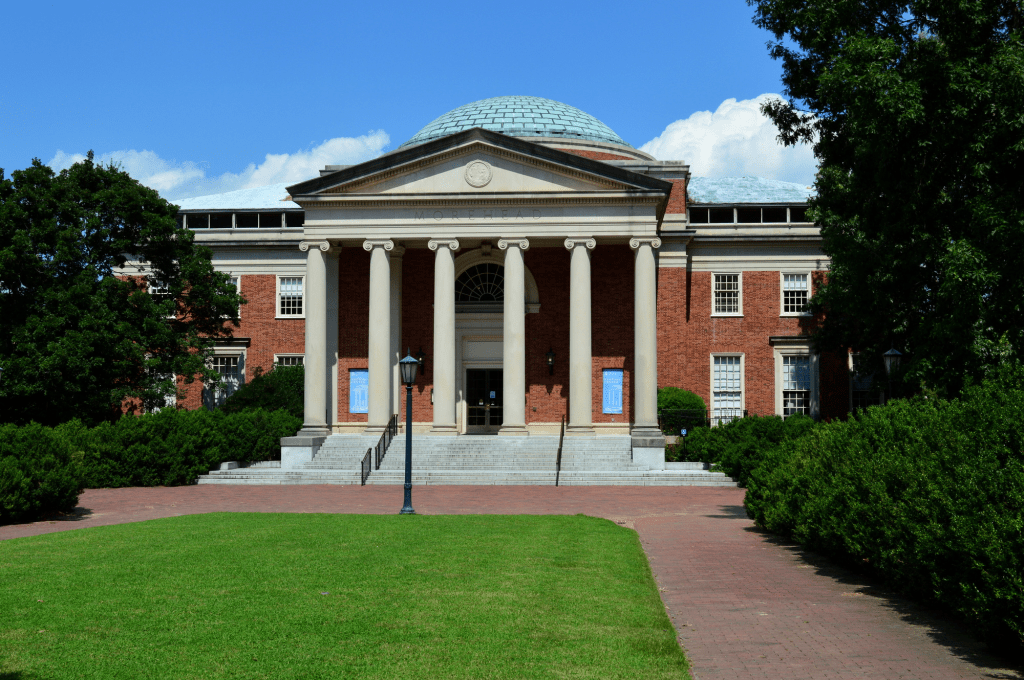
ComSciCon-Triangle will take place on January 19th and 26th from 9am-2:30pm at Morehead Planetarium in Chapel Hill.
Thank you to our sponsors!


Application
Applications to ComSciCon-Triangle 2025 are closed! Applicants have been notified. Follow us on LinkedIn for information about upcoming workshops!
Application and attendance are FREE!
Email us at triangle@comscicon.org with any questions.
Career Networking
One of the most important parts of this workshop is the chance for our attendees to interact one on one with our panelists. This is an opportunity for the attendees to chat in small groups with science communication and outreach professionals about their experiences!
A sneak peak at who is attending:
Dr. Carter Clinton (North Carolina State University)
Robert Hampson (Wake Forest University)
Marley Parker (ML Parker Media)
Lori Palen (Data Soapbox)
Tamara Poles ( SciCom Consulting LLC)
Fenella Saunders (EIC American Scientist)
Dr. Adrian Smith (North Carolina Musesum of Natural Sciences, Ant Lab)
Rebecca Ward (North Carolina State University)
Kari Wouk (North Carolina Musesum of Natural Sciences)
More professionals will be added as they confirm their attendance.
Expert Review Session
Attendees will be tasked with writing or creating a science communication piece to pitch at the end of the conference. Expert reviewers will provide feedback to help attendees craft their pieces prior to pitching.
Expert Reviewers:
Misha Angrist, PhD
Associate Professor in the Social Science Research Institute, Senior Fellow with Duke Initiative for Science & Society, and Visiting Associate Professor at the Sanford School of Public Policy, Duke University
Misha Angrist is a senior fellow at the Initiative for Science & Society and associate professor of the practice at the Social Science Research Institute at Duke University. He holds an MS in genetic counseling, a PhD in genetics, and an MFA in writing. He is interested in the intersection of biology and society, especially as it relates to the governance of human participation in research and medicine. At Duke, his courses include “Responsible Conduct of Research,” “Law, Research, and Bioethics,” and “Science and the Public.” He is the author of Here is a Human Being: At the Dawn of Personal Genomics.
Emma Hinkle, PhD
Senior Medical Writer, MedThink SciCom
Dr. Emma Hinkle has a knack for words and a love of science. Dr. Hinkle is a Senior Medical Writer at MedThink SciCom where she takes complex scientific information from the therapeutic areas of Neurology and repackages it in an accessible way for doctors to be up to date on the latest pharmaceutical research. She defended her PhD in Genetics and Molecular Biology from the University of North Carolina at Chapel Hill where she studied the interplay between genetics and mechanotransduction in skeletal muscle cells. She also has Bachelor’s degrees in both Genetics and English from North Carolina State University. In her spare time, Dr. Hinkle reads voraciously and enjoys picking heavy things up and putting them down again.
Ken Kingery
Assistant Director of Communications and Media Relations, Duke University
Ken is a science writer from northeastern Ohio who has degrees in aerospace engineering and journalism. He bounced around between the University of Idaho, Michigan State University, and Virginia Tech before landing at Duke University’s Pratt School of Engineering, where he has been for 11 years.
Lori Palen, PhD
Owner & Principal Consultant, Data Soapbox, LLC
Lori Palen, PhD, is a social scientist and owner of Data Soapbox (datasoapbox.com), a research communication firm. She partners with clients to develop effective and attractive reports, presentations, infographics, and more. Prior to founding Data Soapbox, Lori worked as an adolescent behavioral health researcher and a human service practitioner. Lori holds a BA in psychology from the College of William & Mary and a PhD in human development and family studies from Penn State. She lives in Cary, NC, with her husband, two sons, assorted pets, and modest vegetable garden.
Marley Parker
Professional Photographer, Videographer, Science Writer, & Owner of ML Parker Media
Marley Parker has been working as a professional science communicator for over a decade. For the past seven years, her work has primarily focused on deep sea research. Marley has joined 25 expedition teams on eight different vessels, highlighting projects sponsored by NOAA, NASA, the National Science Foundation, the Woods Hole Oceanographic Institution, the Ocean Exploration Trust, and many others.
Fenella Saunders
Editor in Chief, American Scientist Magazine
Fenella Saunders is Editor-in-Chief of American Scientist magazine, published by Sigma Xi, The Scientific Research Honor Society, where she also is Director of Science Communications and Publications. She has been a science writer/editor for more than 25 years, previously for outlets such as Discover magazine, Popular Mechanics, Popular Science, NYU Physician, Scholastic, The Learning Channel, and the Discovery Channel. She holds degrees in computer science from Duke University and in comparative psychology from the City University of New York.
Taylor Tibbs, PhD
Medical Writer, RTI Health Solutions
Taylor is an alumni of UNC-Chapel Hill, where she received her PhD in Microbiology and Immunology. She has been a longtime participant of ComSciCon, including ComSciCon-Triangle, -Flagship, and -SciWri. She has written for multiple science blog and news outlets, including American Scientist, Natural History Magazine, and Nature Careers. She currently works as a medical writer at RTI Health Solutions where she writes manuscripts focused on qualitative clinical research. When she isn’t at her computer writing, she is outside climbing rocks and exploring caves.
Kari Wouk
Head of Public Science Events, North Carolina Musesum of Natural Sciences
Kari Wouk is the Head of Public Science Events at the NC Museum of Natural Sciences where she has worked since 2008. She has a BA in Environmental Studies with a Concentration in Biology from UNC-Wilmington. She and her team coordinate the Museum’s large-scale, public science events including BugFest, Astronomy Days, Reptile and Amphibian Day, Darwin Day, Museum Movie Nights and the Adult Night series, which draw thousands of people to the Museum annually. She is also chair of the Museum’s Green Team. She is passionate about public outreach and science communication to all people, particularly when relating to the conservation of biodiversity.
Organizing Committee
Co-Chairs
Kayla Fulkerson is a 2nd year MSc Biology student at NC State University, collaborating with the NC Zoo to research snake behavior and welfare. She holds a BA in Animal Studies from Eckerd College, where she led research on African elephant behavior as a Lead Researcher in the Comparative Psychology Lab. Passionate about making science accessible and engaging, Kayla thrives on creating positive learning environments. Whether conducting experiments on campus or exploring nature with students, she is dedicated to inspiring and fostering lifelong learners.
Hannah Kania is a third-year Ph.D. student at Duke University, where she works in speciation biology. Her current research is on the mouse lemurs of Madagascar! She is passionate about science communication and has engaged in numerous science dissemination initiatives throughout her career. Her portfolio includes a range of art and written works. Outside of science, she is an avid potter, enjoys running, and loves to explore the outdoors. You can view her portfolio at www.hannahpkania.weebly.com
Committee
Andrey Nosatov is a second-year PhD student in Biomedical Engineering at Duke University. His work focuses on the mechanism of action of nucleic acid vaccines. Andrey received his B.S. in Materials Science and Engineering from the University of Illinois Urbana-Champaign and a M.S. in Biomedical Engineering from Carnegie Mellon University. His interest in science communication began with a high school documentary filmmaking class, which inspired him to create a YouTube channel for short documentaries on science and history. Throughout undergrad and grad studies, Andrey has been involved in helping organize events and symposia on science and science communication, and has presented his work at local and national conferences. He is currently involved with Duke Student Broadcasting, organizing a branch on science communication to give undergraduate students experience in communicating science through multimedia.
Tian Xu is a third-year PhD student studying climate dynamics at Duke University. Prior to this, she studied physics and atmospheric science at Peking University, and earned her bachelor’s degree there. Tian has been interested in environmental protection since childhood, and is looking forward to communicating climate change and engaging with more people. She was thrilled to participate in ComSciCon-Triangle last year and is excited to join the organizing team this year!
Emma Coltoff (she/hers) is a biomechanist at heart and in profession, with a wide-ranging, interdisciplinary skillset. Emma is an alumna of Tufts University, obtaining her Bachelor’s of Science in Mechanical Engineering in 2017, which included coursework in biomaterials, human factors, and robotics. After graduation, she entered an engineering rotational development program, and later, a senior engineering role within the automotive connector industry at TE Connectivity. Yearning to make an impact in the fields of human mobility and surgical outcomes, Emma chose to leave her position and enter graduate training in Biomedical Engineering. She joined the Virginia Tech-Wake Forest School of Biomedical Engineering and Sciences (SBES) program in 2021 under the mentorship of Dr. Philip Brown in his clinical engineering-focused lab. The focuses of her PhD dissertation work are 1) standardization of spinal biomechanical testing and 2) development of a novel test method for characterizing the multiplanar behavior of the human spine. Emma is also passionate about science policy & advocacy, science communication & data visualization strategies, and additive manufacturing for low-cost assistive technology devices & prosthetics. Contact: ecoltoff@wakehealth.edu
Karly Forker is a third-year PhD student in the Department of Biochemistry at Duke University. She uses techniques in structural biology in an effort to decipher the molecular mechanism behind a DNA damage tolerance pathway called translesion synthesis. Karly has been interested in science communication ever since she started her PhD, and she has attended local workshops and is involved in writing for online blogs trying to make science more accessible to the general public. Outside of science, Karly enjoys distance running, exploring local restaurants, and watching movies.
Alyssa Griffin is a second year graduate student at North Carolina State University in the Marine, Earth, and Atmospheric Sciences Department. Under the advisement of Dr. Sarah Larson and Dr. Kathie Dello, her research involves analyzing projected changes in the frequency and magnitude of extreme precipitation in North Carolina. She is partnering with the North Carolina Department of Transportation to update depth-duration-frequency curves for the state, which are used to ensure infrastructure like roads and stormwater drainage systems can withstand heavy rainfall. Her general research interests involve the societal impacts of climate change and extreme weather events and communicating climate information to the public. Alyssa is a New Hampshire native and recent graduate of Plymouth State University where she earned her B.S. in Meteorology and minors in Technical Mathematics and Sustainability. In her free time, she loves to explore the greenways of North Carolina, read fiction books with happy endings, watch Grey’s Anatomy, and root for the Bruins.
Morgan Heckman is a third year PhD candidate in Mechanical Engineering and Materials Science in the Payne Lab at Duke University. Her work is focused on the interactions between nanomaterials and biology. Outside of lab work, she does outreach work with the Shared Materials and Instrumentation Facility at Duke to help bring fun science experiments to students in the Durham Public School system and larger Durham community. She also has a focus on teaching and mentorship with the undergraduate students at Duke.
Iman El-Shiekh is a PhD Student at UNC-CH studying DNA repair at the UNC Lineberger Comprehensive Cancer Center. She is in the Genetic and Molecular Biology Program. She is originally from Egypt. Iman is passionate about science communication and her long-term career dream is to connect bridges between scientists, patients, entrepreneurs and policymakers. Outside the lab, she loves everything outdoors.
Ziyu Wang recently completed her PhD in Fiber and Polymer Science at North Carolina State University, Wilson College of Textiles. Currently, she is a postdoctoral researcher in Dr. Donald Freytes’ lab, part of the joint Biomedical Engineering department at NCSU and UNC. Ziyu’s work focuses on implantable biomaterials and cell-based therapies, covering a range of topics including decellularized tissues, induced pluripotent stem cells (iPSCs), vascular grafts, hernia meshes, bone scaffolds, and wound dressings. Ziyu has a deep passion for science, and believes the discovery process of new things is so exciting and rewarding!
Stanysha Lowery is a second-year master’s student in the Department of Population Health Sciences, with research interests in addressing food security as a key social driver of health among marginalized communities. Currently, she serves as a Medicaid Student Fellow in the Division of Health Benefits at the Department of Health and Human Services, where she analyzes the impact of tailored care management on plan members, among other analyses. Outside of her academic and professional pursuits, Stanysha is an avid solo traveler who enjoys exploring new cultures, is a competitive Scrabble enthusiast, and finds creative relaxation in painting by numbers.
Originally from Nashville, TN, Abby Poff has lived in the Triangle for five years while pursuing her doctorate in molecular genetics at Duke University. Her thesis work focuses on changes in stem cell biology underlying DDX3X syndrome, a rare neurodevelopmental disorder. Her interest in science communication stems from her work with the DDX3X Foundation, through which she’s shared her research findings directly with the friends and families of those with DDX3X syndrome. When she’s not in the lab, Abby can usually be found at home, reading or playing a cozy video game, or in her neighborhood, walking her senior rescue dog.
Jameson Blount is a fourth-year bioinformatics Ph.D. candidate at Duke University. His current research focuses on how genome-wide association mapping can be used to understand the genetics underlying physical traits in model organisms. He is also Deputy Editor at GeneBites, where he often writes about current genomics research.
Lauren Neldner is a 2nd year masters student at Duke University in the Medical Physics program, focusing on diagnostic imaging systems such as CT and MRI. Her research is focused on medical displays used for digital pathology and she have a passion for improved communication and education about medical related radiation. Prior to finding her groove in MedPhys, Lauren studied piano acoustics, used satellite data to study fault lines, and even taught 6th grade science for two years! Lauren’s love of SciCom began with science fair and has been fostered by the creators of The Story Collider, SciShow, and XKCD. She can’t wait to see what we all learn and accomplish at this year’s ComSciCon! Lauren is from Orlando, FL, loves painting & crafting, her comfort shows are Bones and White Collar, and she love volunteering with youth programs and events.
Panelists & Speakers
This year’s 10th anniversary workshop will feature panelists and speakers from North Carolina.
Get excited for panels on Public Engagement and Entrepreneurship as well as invited talks on Science News Writing, How to Leverage Your Scientific Training in SciComm, and Multimedia for Science Communication.
Speakers:
Robert Hampson, PhD
Professor, Wake Forest Institute of Regenerative Medicine, Wake Forest University
Dr. Robert E. Hampson is a neuroscientist, professor, and author who spends his time exploring the frontiers of memory research and the far reaches of the imagination. With a Ph.D. in Physiology & Pharmacology, he studies how brains encode memories and develops futuristic technologies like neuroprosthetics. By day, he’s a professor at Wake Forest University School of Medicine, mentoring students, teaching science communication, and occasionally wondering why coffee isn’t considered a research tool. By night, he’s a hard science fiction author who turns real-world science into thrilling, character-driven stories. His work has earned accolades for scientific accuracy—because, let’s face it, nothing ruins a sci-fi adventure like bad science. With over 30 short stories, multiple novels, and critical praise for works like The Moon and the Desert, Dr. Hampson proves that science and storytelling make a perfect pair. Whether decoding neurons or crafting futures, he’s always pushing boundaries!
Rebecca Ward, PhD
Postdoctoral Research Scholar with the Coastal Resilience and Sustainability Initiative and Director of the Coastal Community Resilience Immersive Training Program, North Carolina State University
I am a postdoctoral research scholar with the Coastal Resilience and Sustainability Initiative at NC State University, where I focus on bridging scientific research and community application in coastal resilience and climate adaptation. As the director of the Coastal Community Resilience Immersive Training Program, I train AmeriCorps members to conduct risk and vulnerability assessments with low-capacity coastal communities. My work emphasizes translating climate-related research and science into actionable insights for local and state partners. My interdisciplinary efforts have also explored learning and decision making in the context of climate change, including developing the FutureScape serious game, creating standards-aligned weather and climate curricula, and studying scientists’ and teachers’ use of visual displays for climate change outreach and education. I hold a PhD in Science Education, a MS Atmospheric Sciences, and BS degrees in Meteorology and Applied Mathematics from NC State University.
Lecturers:
Fenella Saunders
Editor in Chief, American Scientist Magazine
Fenella Saunders is Editor-in-Chief of American Scientist magazine, published by Sigma Xi, The Scientific Research Honor Society, where she also is Director of Science Communications and Publications. She has been a science writer/editor for more than 25 years, previously for outlets such as Discover magazine, Popular Mechanics, Popular Science, NYU Physician, Scholastic, The Learning Channel, and the Discovery Channel. She holds degrees in computer science from Duke University and in comparative psychology from the City University of New York.
Adrian Smith, PhD
Head of the Evolutionary Biology & Behavior Lab at the North Carolina Musesum of Natural Sciences; Research Assistant Professor in Biological Sciences at NC State Ant Lab
Adrian Smith, Ph.D. is an entomologist and media maker. Most days, you can find Adrian working in a glass-walled research lab at the science museum in downtown Raleigh, filming insects. In his research he’s discovered curiosities of the insect world ranging from ants with 200 mph jaw movements to fly maggots that live in dead trees and use their bodies as a spring to fling themselves into the air. His more creative work centers on media production and sharing stories about science, discovery, and interesting bugs. At NC State, he teaches media making to scientists in his course “Creative Media Production for Scientists”. He is the Head of the Evolutionary Biology & Behavior Lab at the NC Museum of Natural Sciences and a Research Assistant Professor in Biological Sciences at NC State.
Panelists:
Carter Clinton, PhD
Assistant Professor, Department of Biological Sciences, North Carolina State University
An Assistant Professor at North Carolina State University and a National Geographic Explorer, Dr. Carter Clinton offers a unique and invaluable perspective to the Global One Health Academy (GOHA). Holding a Ph.D. from Howard University and possessing postdoctoral experience in Anthropology and Biology from Pennsylvania State University, Dr. Clinton has developed a multidisciplinary research approach. This approach not only aligns with GOHA’s mission to emphasize health as a public good but also addresses cross-cutting issues such as zoonotic diseases, antimicrobial resistance, and health disparities in underrepresented populations through a preventative, population-based focus. Dr. Clinton is pioneering a research program that provides a non-invasive alternative for studying past human populations through burial soil analysis. This method, significant amid ethical debates regarding the use of human remains, aligns with GOHA’s emphasis on respecting health as a public good and maintaining existing systems and structures. Beyond his lab work, Dr. Clinton is deeply committed to empowering African American communities. He focuses on training culturally competent researchers and disseminating knowledge in various accessible formats, extending his impact in the field of global health and community engagement.
Will Freund
Community Engagement Specialist, Morehead Planetarium and Science Center
Will is a passionate Community Education Specialist with Morehead Planetarium and Science Center who loves to bring science to life through the art of storytelling. With his extensive background as a science educator, He leads some of the NC Science Festival’s most popular public and K-12 programs including the Teen Science Café, Carolina Science Café, and SciMatch for Middle School. Will also serves as President on the Board of Directors for the Environmental Educators of North Carolina and recently became an award-winning documentary filmmaker for his film “Blue Glacier Then & Now”.
Donald P. Frush, MD, FACR, FSABI, FAAP
Professor of Radiology, Duke University
Donald P. Frush MD, is the John Strohbehn Professor of Radiology, and an Associate Faculty Member, Medical Physics Graduate Program at Duke University Medical Center. Dr. Frush earned his undergraduate degree from the U.C. Davis, MD from Duke University School of Medicine, was a pediatric resident at U.C. San Francisco, completed a radiology residency at Duke Medical Center and a fellowship in pediatric radiology at Children’s Hospital in Cincinnati. Dr. Frush’s research interests are predominantly involved with pediatric body computed tomography (CT), including technology assessment, techniques for pediatric CT examinations, assessment of image quality, radiation dosimetry, and radiation protection and risk communication in medical imaging. He is currently the chair of the Image Gently Alliance and has professional roles in organizations including the NRCP; National Academies of Science, Engineering and Medicine; International Society of Radiology, IAEA and WHO.
Lori Palen, PhD
Owner & Principal Consultant, Data Soapbox, LLC
Lori Palen, PhD, is a social scientist and owner of Data Soapbox (datasoapbox.com), a research communication firm. She partners with clients to develop effective and attractive reports, presentations, infographics, and more. Prior to founding Data Soapbox, Lori worked as an adolescent behavioral health researcher and a human service practitioner. Lori holds a BA in psychology from the College of William & Mary and a PhD in human development and family studies from Penn State. She lives in Cary, NC, with her husband, two sons, assorted pets, and modest vegetable garden.
Marley Parker
Professional Photographer, Videographer, Science Writer, & Owner of ML Parker Media
Marley Parker has been working as a professional science communicator for over a decade. For the past seven years, her work has primarily focused on deep sea research. Marley has joined 25 expedition teams on eight different vessels, highlighting projects sponsored by NOAA, NASA, the National Science Foundation, the Woods Hole Oceanographic Institution, the Ocean Exploration Trust, and many others.
Tamara Poles
Founder and CEO, Universal SciCom (formally known as SciCom Consulting LLC)
Tamara Poles is the founder and CEO of Universal SciCom (formally, SciCom Consulting, LLC), a leading firm specializing in science communication and strategic consulting for scientists, STEM professionals, and organizations. With a background in biology and informal education, Tamara has earned national and international recognition for her dynamic workshops, influential keynotes, and impactful leadership in science communication. She has been selected as one of the 20 leading minds in science communication and served on an international delegation in Kuwait. Her work, including the groundbreaking IMPACTS program, has transformed the way scientists engage with the public. Tamara’s expertise has been featured in peer-reviewed publications, and her contributions have earned her prestigious roles, including Accessibility Director for the Association of Science Communicators, Artistic Advisory Board Member for Story Collider, and Expert Advisor for the Humanities Communication Convening.
Kari Wouk
Head of Public Science Events, North Carolina Musesum of Natural Sciences
Kari Wouk is the Head of Public Science Events at the NC Museum of Natural Sciences where she has worked since 2008. She has a BA in Environmental Studies with a Concentration in Biology from UNC-Wilmington. She and her team coordinate the Museum’s large-scale, public science events including BugFest, Astronomy Days, Reptile and Amphibian Day, Darwin Day, Museum Movie Nights and the Adult Night series, which draw thousands of people to the Museum annually. She is also chair of the Museum’s Green Team. She is passionate about public outreach and science communication to all people, particularly when relating to the conservation of biodiversity.
Eric Monson, PhD
Data Visualization Analyst, Duke University Libraries
Eric Monson is a data visualization specialist with the Duke University Libraries’ Center for Data and Visualization Sciences. Although his PhD is in Applied Physics, from 2007 until he joined CDVS in 2015 he collaborated with Duke faculty and graduate students from Math to Computational Biology to Art History, helping them transform, visualize and understand their data. In his current position he enjoys introducing people to important skills they need but were never trained in, whether that means teaching visual design and communication to scientists, or helping humanists incorporate technology into their scholarship.
Program
ComSciCon-Triangle will take place on January 19th and 26th from 9am-2:30pm at Morehead Planetarium in Chapel Hill.
See this year’s program book here!
Venue & Parking
The 2025 Rendition of ComSciCon-Triangle will take place at Morehead Planetarium to commemorate our 10 year anniversary!
The workshop will be held January 19th and 26th from 9am-2:30pm.
Venue Accessibility Information
Parking Information (Directly from Morehead’s Website):
PARKING FOR CARS AND VANS
Parking for Morehead visitors is available in several area parking lots and on Franklin Street in downtown Chapel Hill.
The closest parking lot is located directly in front of the Morehead Building and is owned and operated by UNC as a campus-wide parking lot.
Parking on Saturdays and Sundays is free unless the lot is reserved for special events. After business hours and on weekends, other parking lots on the UNC campus may also have spaces available. Overnight parking is not permitted in this UNC lot.
We strongly encourage visitors to plan ahead and allow adequate time to find alternate parking (visit Park on the Hill for more information). Thank you for your understanding as the University works to create an improved parking environment at Morehead. Questions concerning this parking lot can be directed to UNC Transportation and Parking at 919.962.3951.

Write-a-thon
ComSciCon-Triangle 2025 Write-A-Thon Instructions
The Prompt:
Every invited attendee will be required to produce a piece of original science communication. Each piece will go through an expert-led review session to refine the work prior to pitching. We hope that you will then submit your polished pieces to our media partners for possible publication! The workshop will feature a specific invited talk about scientific writing for the news on January 19th to help you craft your piece!
Here are some guidelines:
- Choose a potential target publication before you start writing (see below for list of publication partners). This will help you think about your audience as you craft your piece. If you have an unlisted publication outlet in mind, please let the Write-A-Thon coordinators know (triangle@comscicon.org)
- Don’t just write about a topic—try to tell a story (use the narrative arc, include compelling characters, etc.)
- Aim for about 500-800 words
- Attendees may produce multimedia instead of a written piece. Though we are best equipped to assist with written pieces, we can work with our expert reviewers to help you with multimedia. If you choose to produce a multimedia piece, please let the Write-A-Thon coordinators know (triangle@comscicon.org) BEFORE the first day of the workshop
- While publication is not required, all attendees are required to participate in the Write-A-Thon (attending both days of the workshop, submitting drafts on time, participating in peer review session).
Check out this year’s instructions here!
 ComSciCon