
Welcome
The June 2015 ComSciCon national workshop was the third in our annual series of workshops for graduate students nationwide. Our ComSciCon workshops support graduate students engaged in and committed to leadership in the communication of research throughout science and engineering to broad and diverse audiences.
The structure and format of the workshop will be similar to the ComSciCon13 and ComSciCon14 events. Attendees will interact with graduate student leaders in science communication from around the country, learn from expert professional communicators including journalists and educators, and will produce original works of science communication for publication.
Graduate students from all fields of science and engineering at all US institutions were invited to apply. The application closed on March 1st. The workshop is free to attend, and accepted applicants will receive travel reimbursement and housing at Harvard University facilities. As in past years, the workshop will be held at the Microsoft New England Research and Development Center.
Program
Full PDF Program
The complete program includes the full program schedule; schedule of poster presentations; schedule of pop talks; biographies of panelists, speakers, and facilitators; poster session abstracts; and more.
Program description
The ComSciCon15 workshop for graduate students will take place June 18-20th, 2015 and will feature panel discussions with expert science communicators including leading journalists, fiction and non-fiction authors, public policy advocates, educators, and more discussing the following topics:
- Panel 1: Communicating with Non-Scientific Audiences
- Panel 2: Science Communication in Popular Culture
- Panel 3: Communicating as a Science Advocate
- Panel 4: Multimedia Communication for Scientists
- Panel 5: Addressing Diversity through Communication
Workshop participants will produce an original piece of science writing and receive feedback from workshop attendees and invited experts. Time for peer editing, revision, and expert review is built into the schedule.
Special sessions will be held focusing on organizations and collaborative projects presented by attendees (poster session), career opportunities (sponsored by AAAS / Science Careers), mock interviews, pitching, conference organizing, and K12 education.
In addition to these sessions, ample time is allotted for interacting with the experts and with graduate student attendees from throughout the country to develop new science outreach collaborations.
Google Calendar
The full schedule of events is available as an importable Google Calendar.
Full Program Schedule
All events to take place at the Microsoft NERD Center unless otherwise noted.
| Thursday | June 18th |
| 8:30 – 9:00 am | Breakfast |
| 9:00 – 9:15 am | Welcome |
| 9:20 – 10:50 am | Panel 1: Communicating with Non-Scientific AudiencesNancy Shute, NPRLiz Bass, Alan Alda CenterJohn Durant, MIT MuseumCornelia Dean, author for the New York Times and more |
| 11:00 – 12:30 pm | Panel 2: Science Communication in Popular CultureKalliopi Monoyios, science illustratorKevin Grazier, planetary scientist and Hollywood science advisorVandana Singh, speculative fiction authorAlan Brody, Professor of Theater, MIT |
| 12:30 – 1:30 pm | Lunch |
| 1:30 – 3:00 pm | Panel 3: Communicating as a Science AdvocateStephanie Keep, National Center for Science EducationPallavi Phartiyal, Union of Concerned ScientistsGabriel Popkin, freelance science writerSheila Jasanoff, Professor, Harvard Kennedy School |
| 3:10 – 4:00 pm | A video message from Bill McKibben and Discussion |
| 4:00 – 5:00 pm | Career Mingle Sponsored by AAAS / Science Careers (Snacks and Beverages Provided) |
| 5:30 – 6:00 pm | Peer Editing Information |
| 6:00 – 8:00 pm | Dinner and Peer Editing |
| 8:00 – 9:00 pm | Writing cafe (drafting time with snacks) |
| Friday | June 19th |
| 8:30 – 9:00 am | Breakfast |
| 9:00 – 10:30 am | Panel 4: Multimedia Communication for ScientistsFraser Cain, publisher of Universe TodayHenry Reich, producer of Minute PhysicsMargaret Kosmala, Snapshot Serengeti citizen science project leaderAri Daniel, Digital Producer for NOVA & Independent Multimedia Science Reporter |
| 10:45 – 12:15 pm | Panel 5: Addressing Diversity through CommunicationRobin Nelson, Asst. Professor of Anthropology, SkidmoreDarryl Williams, Center for STEM Diversity at TuftsApoorva Mandavilli, author for Nature, Discover, and moreDeb Chachra, Assoc. Professor, Olin College of Engineering |
| 12:15 – 1:15 pm | Lunch |
| 1:15 – 3:15 pm | Interactive Small Group Sessions:Mock Interviews, facilitated by:Doug Dollemore: Senior Science Writer, American Chemical SocietyLiz Bass: Alan Alda CenterNancy Shute: NPRPitch Slam, facilitated by:Amanda Yarnell: Managing editor, editorial, Chemical & Engineering NewsEllen Clegg: Editorial page editor, The Boston GlobeGabriel Popkin: freelance science writerEmily Singer: senior writer, Quanta MagazinePhil McKenna: freelance science journalist |
| 3:30 – 5:20 pm | Expert Review Session |
| 5:20 – 5:30 pm | Attendee group photo |
| 6:30 pm | Conference Dinner (Elephant Walk restaurant) |
| Saturday | June 20th |
| 8:30 – 9:00 am | Breakfast |
| 9:00 – 10:30 am | How to Run a ComSciCon-local Event (with discussion/breakout time) |
| 10:30 – 12:30 pm | Poster Session and Optional Filming/Feedback on Pop Talks |
| 12:30 – 1:00 pm | Lunch (will also be available during the poster session) |
| 1:00 – 4:00 pm | Graduate student – K12 teacher lesson development session |
| 4:00 pm | Closing remarks |
Write-a-thon guidelines
Overview
One of the central activities of ComSciCon is the write-a-thon, in which you will apply the communication skills you are learning to your own writing/science communication. To prepare for the write-a-thon, you will need to produce and submit a draft by Friday, May 29. We anticipate that most of the submissions will be written work, but we encourage you to submit a podcast segment or video if you are interested in workshopping non-written media.
Before and during the conference, you will work in peer-editing groups to discuss and edit your draft. Your group will then be assigned an expert panelist who will read and further critique your work. After the conference, ComSciCon organizers will help you to reach out to publication outlets if you are interested in publishing your work. You can find past examples of published attendee writing here.
Timeline for Write-a-thon:
- Friday, May 29: Written draft, podcast, or video due
- Monday, June 1: Peer editing groups assigned
- Friday, June 12: Pre-conference editorial notes within group due
- Thursday, June 18: Peer editing and expert review at ComSciCon
- Friday, June 19: Expert review at ComSciCon
Guidelines
The goal of the write-a-thon is for attendees to practice and receive guidance on the science communication skills they have been exposed to during the workshop. The write-a-thon should help you push your own personal boundaries. Get out of your comfort zone! Try a new writing style, write about a topic you are interested in but know little about, talk to other attendees about your work, approach the panelists, but most importantly have fun!
Start by picking a topic that interests you (perhaps something related to your own research, or perhaps not), then pick a target audience (perhaps a New York Times reader, or perhaps PhD students), then pick a frame (e.g. a reason why your writing should interest the reader, or how it could affect their lives). A typical piece should be about 600-800 words (2-3 double-spaced pages), and definitely no more than 1000 words. If you are submitting a podcast or video, please keep your piece under 5 minutes. In the header of your document, include your piece’s topic, intended audience, and desired publication outlet if you’re interested in publishing. If you plan to submit your piece to a magazine or other publication, consider the typical article length in that publication. At the end of your piece, include a short (2-3 sentences) biography including your research interests and degree program.
You can write whatever you want (as long as it’s about science) but we have compiled a list of prompts for you here to help with brainstorming:
ComSciCon Suggested Write-a-thon Topics
1. Write about an instrument that you or others in your field use to make measurements. What kind of measurements does it make, and why are they interesting? How does the machine work? How many machines like it are there in the world?
2. Write about how a commonly held belief in your field of science has been challenged or overturned recently.
3. Write about a recent or seminal discovery in your field or a related field.
4. Interview and/or write about a person in your scientific community
5. Write a concise, compelling summary of a published paper on which you are an author.
6. Put your audience in your shoes: Tell a story about what it’s like to do your lab or field work.
7. Write about anything else that is related to science!
Attendees will receive additional information by email with instructions on how to submit your piece and begin the peer editing process.
K-12 session guidelines
During the K12 session at ComSciCon15, practicing scientists (our graduate student attendees) will work together with professional educators (K12 teachers, museum staff, and other science education specialists) to develop new curriculum materials bringing cutting edge research into K12 classrooms and informal learning environments.
Before the workshop, the graduate student attendees will draft a piece of writing targeted at a K12 audience. The educators will join ComSciCon’s graduate student attendees for the Saturday session of ComSciCon. Students will have the opportunity to interact with them throughout the poster session. Saturday afternoon, the students and educators will work together to revise their writing and further develop it into an activity suitable for a K12 classroom. The output products will contribute to an online database of these pieces for teachers across the nation to use.
Preparation for K12 teachers and educators: For educators, no preparation is required before the workshop. During the workshop, you will read and help to revise pieces written by the graduate students.
Preparation for graduate student attendees: In preparation for the K12 session, graduate student attendees will be required to write a short piece for a K12 audience. Please see examples and guidelines below.
Example attendee submission
Example output product after working with teachers at workshop
Requirements
Submission: Attendees will receive instructions by email specifying how to submit & upload their piece.
Pre-workshop deadline: Friday, June 5th
Example: See the example above for guidance on form and content.
Content guidelines:
Scientist profile:
Length: about 4 sentences
Please include a mini-biography about yourself and your research.
Include a photo of you, in the lab or in the field if possible.
Reading for students:
Length: 400 words or less
Choose a specific research paper or topic related to your research (it does not have to specifically about your research, but must be in your field)
Identify an interesting aspect of the paper or topic that relates to a concept of fundamental importance in your field
In a few brief paragraphs, using language appropriate for your target grade level, explain the concept and its importance to your research field
You are encouraged to include figures and, if your activity involves data analysis, tables listing the relevant data
If you already have ideas for demos, experiments, hands-on activities, labs, or data analysis questions that relate to your piece please include a short summary or web link to them
If you are familiar with the Next Generation Science Standards and/or the Common Core Standards feel free to link your piece to relevant standards. If you are not familiar with them, don’t worry about it. We’ll be working on this part of the piece during the workshop!
Formatting guidelines:
At the top of your document please include:
Name: Your first and last name
Topic: The science topic(s) of your piece
Grade: The grade level of your intended audience (eg elementary, middle school, high school)
Classes: What classes you think your piece could be adapted for?
For example, elementary science, middle school science, biology, chemistry, physics, astronomy, algebra, geometry, pre-calculus, statistics.
When thinking about math classes, even if you are writing a science focused piece, think about whether your work has a data analysis component that could be used in a math class).
The formatting of the scientist profile is unimportant. Just put it at the bottom of the written piece and we’ll take care of the rest.
Poster session guidelines
On Saturday, June 20th, we will hold a poster session highlighting the outreach, communication, and social media activities of our attendees. We hope that all attendees will apply to give a poster at the workshop.
For a fuller sense of the topics and content of ComSciCon posters, please see last year’s abstracts on the ComSciCon14 program. We ask attendees to dream big! Do you have a project which you’d like to see spread nationwide? Do you want to start something, but need collaborators? Projects might include school outreach programs, a blog, developing teaching tools, public science nights, etc.
Poster Application Process
Please fill out the attendee preparatory survey form that was distributed by email to submit an abstract. The deadline for abstract submissions is Friday, May 1st.
The poster session will utilize ePosterboards, enabling participants to embed videos/other media into your poster. For attendees whose poster abstracts are accepted, we will provide an ePosterboards poster template and you will be required to submit the final version of your poster by 11pm on June 7th (1.5 weeks before the conference) so that we can ensure technical compatibility. Please only submit an abstract if you can commit to finishing your poster by that date.
Depending on how many attendees submit an abstract, space may be somewhat limited, so we will let you know the status of your submission by Friday, May 15th.
Poster Formatting Guidelines
Please follow ePosterboards’ formatting guidelines when preparing your poster. A how-to guide and poster template is provided to assist you in making your poster using Powerpoint.
If you create your presentation on a Windows PC, please save any formulas or equations as an image, for consistent display on the ePosterboards equipment.
Please direct any specific formatting questions to ePosterboards’ tech support page.
Presenters, please upload final drafts of your presentations via the ePosterboards website. Please fill out the form, selecting the ComSciCon Workshop from the dropdown menu, attach your poster content (including multimedia files), and submit the form. Upon submission, you will receive an email confirmation.
Travel and Venue
Venue
The June 2015 ComSciCon national workshop will be held at the Microsoft New England Research & Development Center in Cambridge, MA June 18-20th, 2015.
The Center is located at: One Memorial Drive Suite 100 Cambridge, MA 02142
For detailed directions for car and public transportation, please visit the Center’s website.
Please bring a photo ID to ensure admittance into the NERD Center.
When you arrive at 1 Memorial Dr., you will need to check in at the ground floor security desk. They will ask to see a photo ID. Please tell them you are there for a NERD Center event and they will send you up to the first floor, where ComSciCon is taking place.
The Microsoft New England Research & Development Center (NERD) is a research and software innovation campus located in the heart of Cambridge, Massachusetts. The NERD vertical campus spans two buildings with its primary presence and conference center located at One Memorial Drive and a recently renovated and expanded space located at One Cambridge Center. NERD is home to some of Microsoft’s most strategic teams including Microsoft Research New England, Microsoft Application Virtualization (App-V), SharePoint Workspace, Microsoft Technical Computing, Microsoft Advertising, Microsoft Lync, Microsoft Office 365 and more. NERD has become a hub of activity for the local tech community and has hosted more than 900 events and welcomed more than 80,000 visitors during the past three years.
This view shows the entrance to the Microsoft NERD center, from Memorial Drive, in Google Street View:
Getting to Cambridge
By Plane
Cambridge is served by Boston Logan International Airport. The trip from Logan to Cambridge is roughly 20 minutes by taxi or 40 minutes by public transportation (the T). To travel by T, take the Silver Line bus from the airport to South Station and then transfer to the Red Line subway. Take the Red Line “inbound” towards Alewife. See directions below for accessing the workshop accomodations and venue from the subway.
By Train
Trains into Boston stop at South Station, Back Bay, and North Station. To travel by subway (the T) from South Station, take the Red Line “inbound” towards Alewife and get off at the Harvard Square Station. From Back Bay or North Station, first take the Green Line “inbound” toward Park Street and then transfer to the Red Line (see above). See directions below for accessing the workshop accomodations and venue from the subway.
Boston & Cambridge Public Transportation
Please check the MBTA website for bus and subway schedules.
Upon arrival at the Harvard dormitories, all non-local attendees will be provided with a week-long pass on the Boston-area subway system (the T) to facilitate their travel between the housing and workshop venue and elsewhere in the area.
Accomodations
For non-local attendees, a single occupancy room will be provided free of charge in the Harvard graduate dormitories the nights of June 17-21. Rooms will be in or near Perkins Hall (tentative – to be confirmed), located at 35 Oxford Street, Cambridge, MA. Upon your arrival in Cambridge, please check in at the dormitory (after noon on Wednesday, June 17th), where members of our organizing committee will be ready to check you in.
Travel from Boston Logan Airport:
Get on the Silver Line bus (SL-2) at your terminal. The bus only goes in one direction and is free of charge. At South Station, you will transfer to the subway (you don’t need to leave the station or pay). Follow the signs to the Red Line subway, and take the inbound train, towards Alewife. Disembark at Harvard Square station.
To walk to Perkins Hall, see the map above (to be added) and follow these walking directions. Cross Harvard Yard to reach the intersection of Oxford and Kirkland streets, which meet at a right angle between the Science Center and Memorial Hall. Walk down Oxford until you reach the first light; Perkins is on the left.
Travel from South Station: Most long-distance trains and buses arrive at South Station. The train station separate is separate from the subway, so you will need to pay ($2.50) to enter. Follow the signs to the T and get on the Red Line towards Alewife. Follow the walking directions from Harvard Square station described above.
Travel to the Workshop Venue
Transport to and from Richards and the Microsoft NERD Center will be by subway. Non-local attendees will be provided with a one-week MBTA subway pass to cover these rides. From Richards, walk to Harvard Square and get on the Red Line, inbound (towards Ashmont or Braintree, both work). Disembark at Kendall/MIT.
From the Kendall station, the NERD center is a five minute walk East on Main St. See the map below.
Housing for graduate student attendees
Non-local graduate student attendees of ComSciCon 2015 will be furnished with a room at the Harvard Graduate School of Arts and Sciences (GSAS) dormitory at Richards Hall, 24 Everett Street, Cambridge, MA.
Checking in: A ComSciCon Organizer will be present to greet you and check you in at Richards Hall from noon to midnight on June 17th.
Checking out: ComSciCon 2015 activities end on the afternoon of Saturday, June 20th and it is expected that most attendees will check out on the evening of the 20th or morning of the 21st. Latest and final check out time in the dorms is noon on Monday, June 22nd. Participants can drop their keys and access cards in the key drop slot in the basement of Perkins Hall, room 20, upon their departure. If keys and access cards are not returned, your deposit will not be reimbursed. You must also collect all of your linens (bedding and towels) and place them in their original bag. Please place this bag on the bed of your dorm room before
Internet Access: In-room access to Harvard’s data network will be available to ComSciCon participants. In order to take advantage of this access, participants must bring a computer that meets minimum network requirements (published on the Harvard University IT website), an Ethernet card or device conforming to 10BaseT or 10/100 standards, or a wireless device conforming to the 802.11b/g protocol. Information about accessing the network will be provided to participants at move-in. Participants are expected to adhere to University policies regarding use of the network. These policies can be found online. Conference participants should pay particular attention to the “Intellectual Property and Copyrighted Materials” policies. Violation of these policies will result in the immediate termination of network access for the participants involved.
Linens & Blankets
GSAS Residential Life will provide 1 linen set for each ComSciCon participant upon arrival. A linen set includes one (1) blanket, one (1) pillow, one (1) pillowcase, two (2) sheets, two (2) bath towels and one (1) face cloth. Soiled linens should be placed in one of the “Soiled Linen” bins or bags provided by GSAS. At the end of the program, all soiled linens should be brought to the linen room. GSAS will arrange for soiled linens to be picked up by the linen rental company
Fans: Fans will be provided in each room because air-conditioning is not available.
Facilities: All floors in Richards Hall have 2 bathrooms per floor. All bathrooms are single sex only. Residents and visitors must use the bathroom designated for members of their sex. The female bathroom doors in all buildings are locked. A combination for these doors will be provided to female residents upon move-in.
Furnishings: All rooms have basic furnishings: a bed, bookcase, desk, desk chair, desk lamp, bureau, closet or wardrobe, and window shades or blinds. Furniture provided by the University cannot be removed from rooms.
Kitchens & Lounges: ComSciCon participants will have access to the kitchens and lounges on the floor in which they are housed. ComSciCon participants are responsible for keeping the equipment in these kitchens and lounges in good condition. ComSciCon participants will be responsible for the replacement or repair of any items due to damage, failure of equipment (beyond normal wear and tear) or theft.
Laundry Rooms & Vending Machines: There are laundry rooms, soda machines and snack machines in the basement of Richards Hall.
Linen Room: Each year a first-floor room in close proximity to a building entrance will be designated as the linen room; for summer 2015, Richards 103 will be the designated linen room.
Kitchens & Lounges: ComSciCon participants will have access to the kitchens and lounges on the floor in which they are housed. ComSciCon participants are responsible for keeping the equipment in these kitchens and lounges in good condition. ComSciCon will be responsible for the replacement or repair of any items due to damage, failure of equipment (beyond normal wear and tear)
Residence Hall Policies: ComSciCon participants are expected to comply with the rules and regulations of the residence halls as outlined in the GSAS Residence Hall Handbook found online. GSAS Residential Life may revoke housing privileges for residents who fail to follow the rules and regulations set forth in the GSAS Residence Hall Handbook or for any other cause the University deems reasonable.
Smoking Policy: Smoking is prohibited in any area of the GSAS residence halls–this includes individual resident rooms and all common areas. Residents who smoke must smoke outside. However, please note that smoking is prohibited within 50 feet of the residence halls. Smoking may not take place within 50 feet of any entrance or window.
Conference Assistants: GSAS Housing Services employs a number of students as Conference Assistants during the summer. The Conference Assistants all live in one of our halls, and are available to help when the Housing Services office is closed. The Conference Assistant on-call can be reached at (617) 721-4394 during the following hours:
Weekday evening hours (Monday- Friday): 5pm-12am
Weekend hours: 9am – 12am
If no Conference Assistant is available, then the University Police (617-495-1212) may be called for assistance.
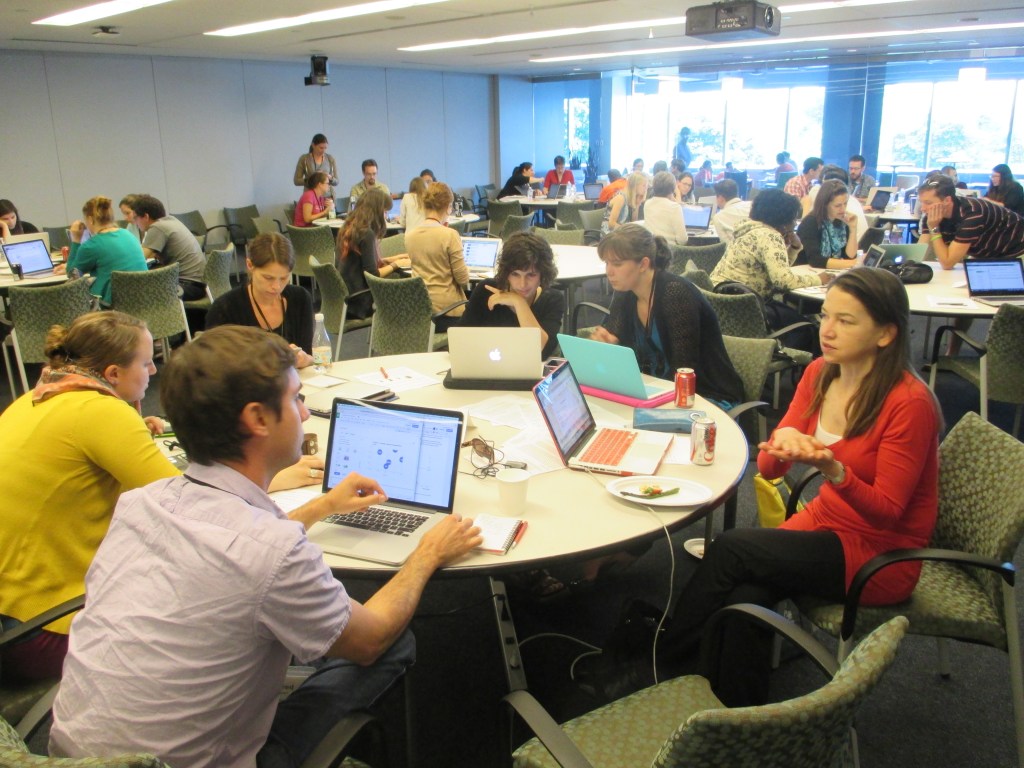
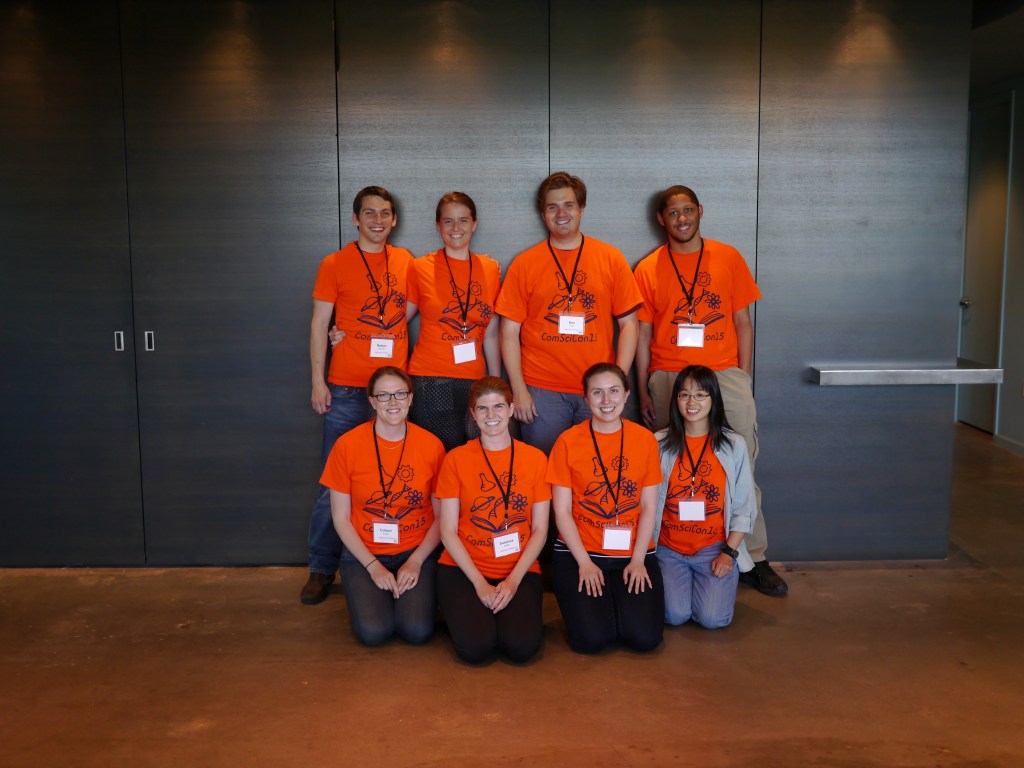
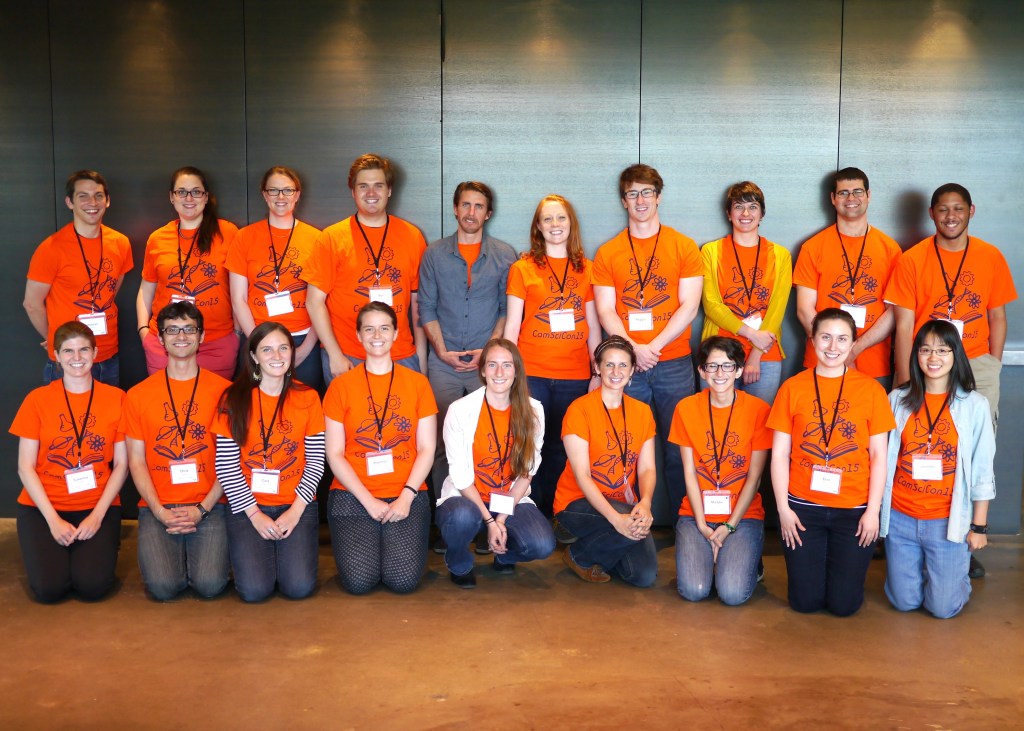
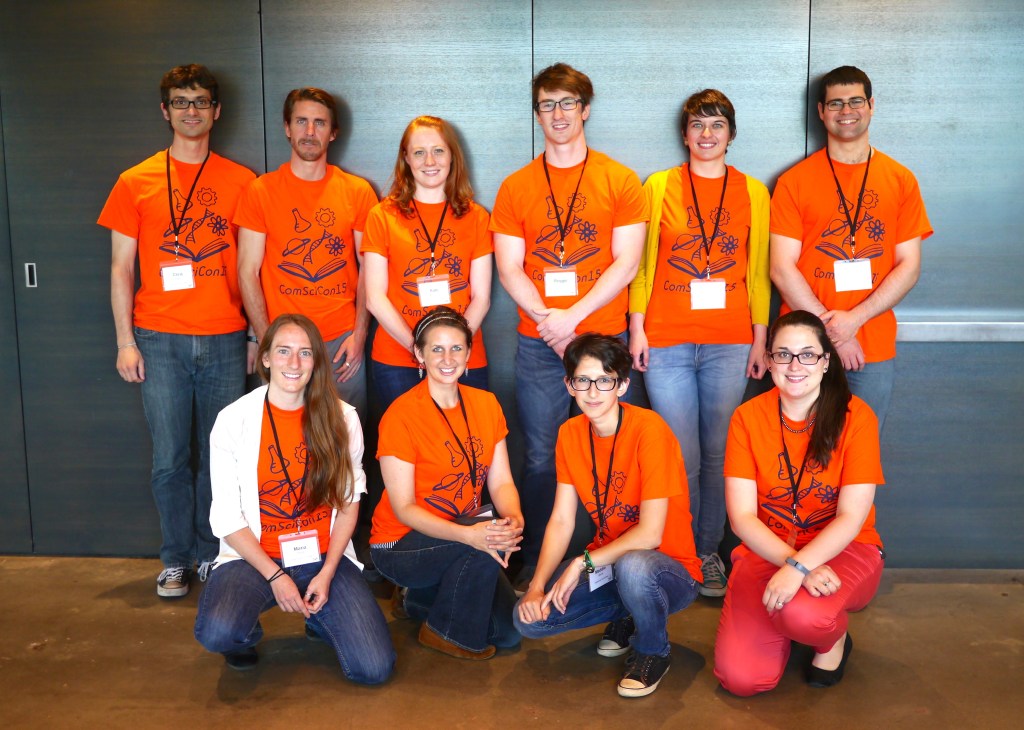
ComSciCon15 Photos




Apply to Attend
Students
The application for the ComSciCon 2015 national workshop closed at 11:59pm EST March 1st, 2015. The application for the 2017 ComSciCon national workshop is available here. The 2016 application will close on March 1st, 2017.
For instant updates on ComSciCon programming and events, subscribe to our mailing list on Google Groups.
Educators
https://docs.google.com/forms/d/e/1FAIpQLSe3OIPFCmSjN1MiSJDfRUlWE8aaC6jODeNjoJtUi9xbEyYS6A/viewform
 ComSciCon