
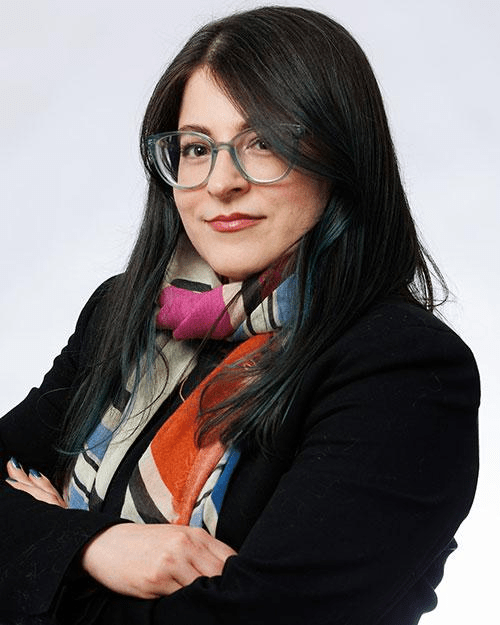
Reflection on Dr. Samantha Jo Fried’s SEEDs Webinar
By Vyshnavi Vennelakanti
Before tuning into Dr. Samantha Jo Fried’s webinar, I had never heard of the “Periodic Table of Expertise” developed by Harry Collins and Robert Evans. What struck me most was not the classification itself, but the sudden realization that expertise is far more complex than I had previously imagined. As researchers, we often think of expertise as a binary: either you are an expert in something or you are not. Fried’s talk challenged this assumption by showing that expertise takes many shapes and each plays a totally different role in how we create, share, and apply knowledge.
Early in the webinar, Fried shared a great example about attempts to reconstruct a TEA laser using only the published training literature. Even with the exact protocol in hand, the researchers could not get the instrument to work until they actually sat down with scientists who walked them through the process. This example immediately resonated with me because it reminded me of one of the most common frustrations in scientific research: reproducibility.
In principle, scientific papers should contain enough information for others to reproduce the reported work. In practice, however, this is seldom the case. Whether in synthetic chemistry or computational chemistry, tiny but crucial details constantly get left out of the published methodology. The authors, being experts, might consider these details obvious, too minor to mention, or standard practice. Yet, these seemingly insignificant details are often exactly what stand between a successful replication and a failed experiment. I have encountered versions of this problem in my own work as a computational chemist. Papers often report the final result or show a figure of a molecular structure without providing enough detail about how the initial model was constructed. Rebuilding the system from scratch can then become surprisingly difficult. Fried’s talk helped me understand why this happens: expertise is not contained entirely within written protocols. Much of it exists as tacit knowledge, i.e., the kind of knowledge that we possess and use but may struggle to articulate explicitly. Looking back at my own struggles to reproduce published data, I realize just how often these unspoken details make or break a project.
This idea of tacit knowledge became even more meaningful when Fried introduced the Periodic Table of Expertise. It is fascinating to see expertise mapped out as a spectrum, ranging from ubiquitous expertise (the everyday know-how) all the way to contributory expertise (where an individual is actively contributing new knowledge to a specific field). I had never really thought about the fact that many of my daily, practical skills could be formally categorized as expertise. It reminded me of Richard Feynman’s famous remark that “philosophy of science is about as useful to scientists as ornithology is to birds.” Just as birds do not need to study ornithology to fly, scientists do not need a formal theory of expertise to do good science. Yet, learning this framework gave me a vocabulary for things that I was already experiencing every day without even realizing it.
One category of expertise that stood out to me was beer-mat knowledge, which refers to the simplified understanding of a concept that can be gained from a very brief explanation, such as something that could fit on a beer mat. On one hand, it is appealing because it makes complex topics accessible through clever summaries, catchy phrases, and quick overviews – this is similar to the idea behind Pop Talks in ComSciCon. On the other hand, I found myself a bit skeptical. While simplifying things is incredibly useful, there is always a risk of losing the vital nuances. In my opinion, beer-mat knowledge is a fantastic entry point, but it is no substitute for digging deeper, so I view it with a mix of appreciation and caution.
Reflecting on all the expertise categories made me realize that I am most comfortable holding contributory expertise. Maybe that just comes from my identity as a researcher. To me, contributory expertise feels active – it is about creating knowledge rather than just absorbing it, and there is something incredibly satisfying about directly pushing a field forward. But Fried’s webinar was a healthy reminder that staying in that lane is not enough. One of the biggest takeaways for me was that having contributory expertise does not automatically give a person interactional expertise. One can be a brilliant researcher in one’s own discipline and still completely strike out when talking to an expert in another field.
This insight took me back to an interdisciplinary collaboration from my PhD. As a computational chemist, I was working with experimentalists studying how colibactin – a bacterial toxin linked to colorectal cancer – binds to DNA. At first, I looked at the project through the lens of my own field. I knew how to build computational models and analyze molecular interactions, but I lacked a deeper understanding of the experimental assumptions that guided the work. As a result, I misunderstood the structure of the DNA-colibactin complex, and four months of my computational work went completely down the drain. I remember confidently presenting my results, only to find out the models themselves were built on a flawed premise because I had misread their system. It was a painful setback, but it taught me an invaluable lesson about teamwork.
Looking at that experience now through the lens of the Periodic Table of Expertise, I see that the issue was never a lack of expertise – it was a mismatch of expertise. I had contributory expertise in computational chemistry, and my collaborators had it in synthetic biochemistry. What I lacked was interactional expertise. I had not spent enough time learning their language, their assumptions, or their methods to talk across that disciplinary border. As the project moved forward, learning to speak their language became just as crucial as running the actual calculations.
For me, that was the most powerful lesson of Fried’s webinar. Expertise is not merely an individual trait; it is deeply relational. True scientific progress often depends not only on what we know but on our ability to communicate with people who know different things. The best collaborations happen when we build enough interactional expertise to bridge disciplinary divides without necessarily becoming contributory experts in each other’s fields.
Ultimately, Fried’s talk completely shifted my perspective on expertise. Instead of seeing it as a fixed skill, I now see it as a spectrum of capabilities that can be strengthened over time. Ideas like interactional expertise and reflective ability are incredibly encouraging because they prove that anyone can meaningfully participate in interdisciplinary work if they are willing to listen, learn, and engage. In a research world that is increasingly defined by cross-disciplinary problems, that might just be the most important kind of expertise we can build.
To view Dr. Fried’s full webinar, you can use the link below:


Leave a Reply